Products in this category
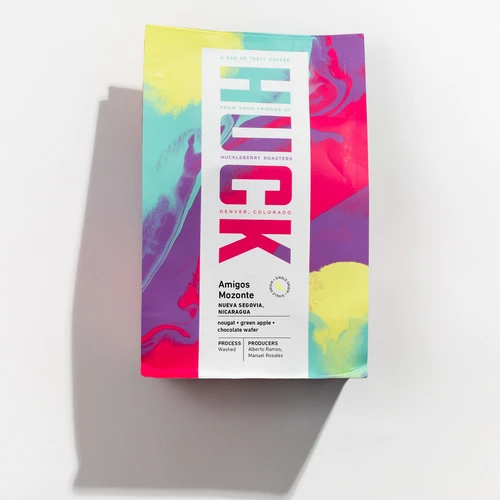
13 itemsAmigos Mozonte, Nicaragua
New name, but is it a new coffee? A half-new coffee?
Amigos Mozonte comes to us from a pair of buds - Alberto Ramos and Manuel Rosales. Both have played a major role at Huck over the past few years, though this is the first time we’ve roasted coffee grown by Manuel.
As far as Alberto goes, his farm, Entre Rios should be a familiar name in our lineup! We’ve featured Entre Rios by itself for the past 4 or 5 years at this point. Alberto named his farm Finca Entre Rios because it sits between the San Francisco, San Isidro, and Margaritozo rivers. And while he's been farming his father's land since his teens, he didn’t purchase his own land until 2007.
Up until now, Manuel has played more of a behind-the-scenes role in our coffee. Manuel is the driving force behind Puma Coffee, the exporter behind the vast majority of our Nicaraguan coffees. Manuel and Puma helped connect us to Alberto Ramos and the Montenegro family, and due to some peculiarities in the Nicaraguan coffee industry, Puma has always played a major role in processing our coffees, undertaking drying duties after the coffee is washed on-farm.
In addition to being a driving force behind all of our Nicaraguan coffees, Manuel also runs a small farm called Finca Puma Punku, right next to Finca Entre Rios in Mozonte. Manuel and Roberto have been friends since childhood, and this year Manuel encouraged us to try a blend of coffees from the two farms. We couldn’t be happier.
Amigos Mozonte is a lovely example of a traditional washed Central America profile - bright, but comforting. We’re tasting nougat, green apple, and chocolate wafer in this tag-team lot from Alberto and Manuel!
$23.00
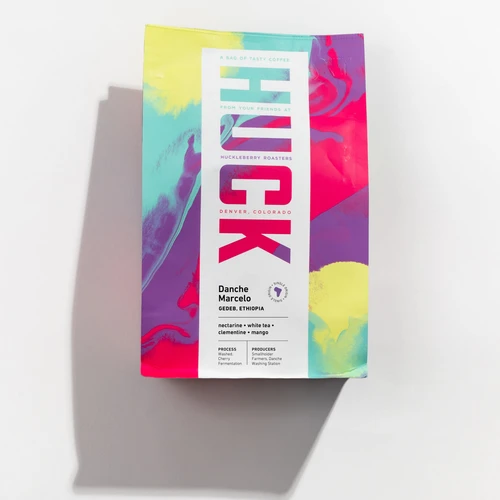
Danche Washed, Ethiopia
Danche brings in a dose of refreshment for the dog days of summer - a lovely washed coffee from longterm partners Snap Coffees and Danche Washing Station!
Ethiopian coffee is special. As the birthplace of Arabica coffee, the country is blessed with unparalleled genetic diversity, plus unique terroir and processing that can produce super floral, citric washed coffees and the cleanest, juiciest, most berry- and tropical-forward naturals.
And Snap Coffees, a quality-focused exporter and washing station operator, has been a longtime partner for us at Huck. We've featured coffees from Snap's Worka Chelbesa and Danche stations for most of the last 5+ years, and coffees from within the Snap network often make up at least some, and sometimes all, of our flagship Phantom Limb Blend.
Danche is Snap’s premier washing station in the Gedeb area, and a hotbed of innovation for the company. We’ve featured naturals and experimental processes from the station in years past, but this year, decided to keep it classic.
Danche washed is pure refreshment. We’re loving the lively florals, white peach fruit tones, and vibrant, key lime pie acidity. There’s nothing quite like a washed coffee from the greater Yirgacheffe region, and this year’s Danche fires on all cylinders.
Roasted coffees marked as Organic Certified Farms/Mills/Cooperatives are not Certified Organic roasted products, as Huckleberry is not an organic-certified roasting facility
$26.00
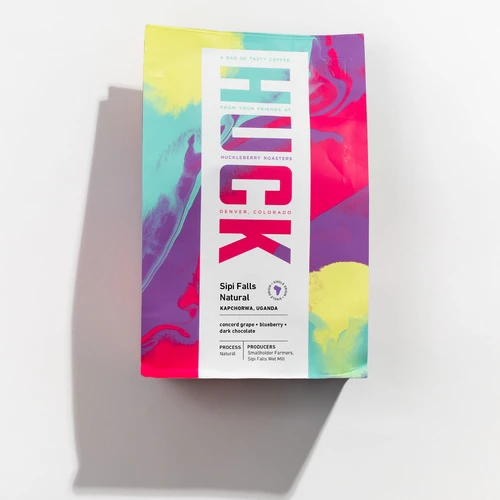
Sipi Falls Natural, Uganda
2026 marks Huck's ninth harvest roasting coffee from the Sipi Falls Wet Mill in Eastern Uganda, and each year, the natural rivals some of our favorites from Ethiopia. But thanks in part to different coffee varieties (SL28 and SL34, most famous in Kenya), this one carries a bit more chocolate and body.
Sipi Falls is one of Uganda's most famous landmarks, and much of the country's best coffee comes from the region. Smallholder farmers in the area deliver coffee to the Sipi Falls Wet Mill in the town of Chema. High altitude, Clay soils, and SL-variety coffees, combined with Sipi Falls Washing Station's impressive attention to detail, yields complex, delicious, and juicy goodness in the cup.
Uganda is an up-and-coming coffee-producing country, but the coffees from Sipi Falls have become coffees we look forward to each year. We’re stoked to showcase the continual improvements in Ugandan coffee, but more importantly, we’re just stoked to have this coffee in our mugs. Sipi Falls Natural packs big fruit flavors of concord grape, blueberry, and cherry, rounded out with bittersweet dark chocolate for a helluva natural
$25.00
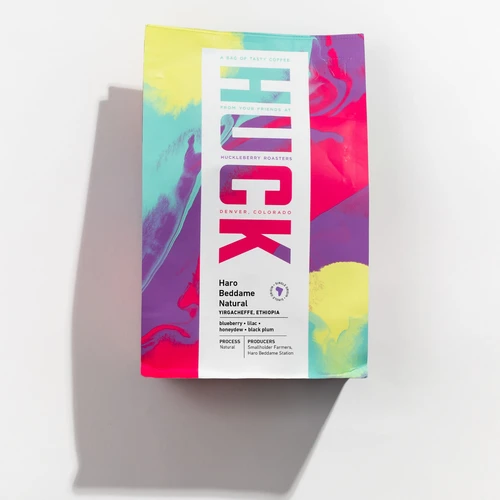
Haro Beddame Natural, Ethiopia
Haro Beddame brings some welcome Ethiopian fruit juice to the Huck roastery! We’re excited to start Ethiopia season with this brand new natural, courtesy longtime partners Snap Coffees!
Ethiopian coffee is special. The country is the birthplace of arabica coffee, and since its coffee has both evolved naturally and been selected for agriculture, the country has unparalleled genetic diversity compared to the rest of the world. That diversity of coffee varieties, plus unique terroir and processing, can produce wonderful coffees that we look forward to every year: super floral, citric washed coffees and the cleanest, juiciest, most berry- and fruit-forward naturals.
Snap Coffees, a quality-focused exporter and washing station operator, is a special partner for us in Ethiopia We've featured coffees from Snap's Worka Chelbesa and Danche stations for most of the last 5+ years, and coffees from within the Snap network often make up at least some, and sometimes all, of our flagship Phantom Limb Blend. Haru Beddame is a new coffee for us, but it’s not necessarily new sourcing.
This January we had the pleasure of spending a few days in Yirgacheffe with Snap, and from the moment we stepped into Haro Beddame station, we knew its coffee would be on our short list for the year.
First off, Haro Beddame is one of Snap’s newest processing stations, sitting at a sky-high 2200 meters above sea level in the Yirgacheffe highlands. Altitude often goes hand-in-hand with complexity, and the station brings in coffee from smallholder farmers in some of the highest areas in the central Yirgacheffe region. The station also focuses exclusively on the natural process, and that focus pays off. When we visited the station, we were welcomed by station managers Abram and Andualem, and beds full of immaculate-looking coffee cherries. That altitude and single-minded intention yields a lovely coffee that we’re excited to roast for the first time!
When we brew Haro Beddame, the first thing we notice is blueberry. But there’s more there, and as we sip on the coffee, layers of lilac, raspberry, honeydew melon, black plum, and brown sugar unfold. We couldn’t even fit everything we wanted to fit on the bag! Regardless, if you’re looking for fruit, you can’t go wrong with this one!
$26.00
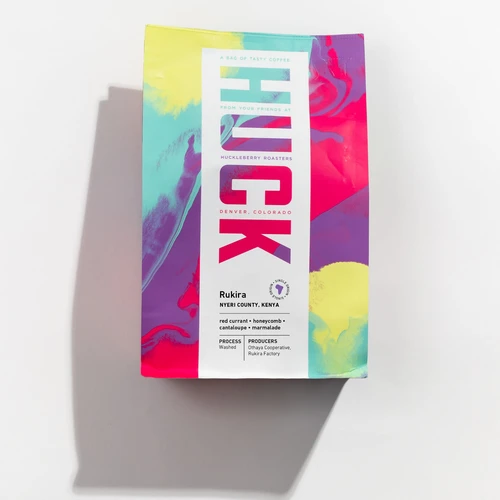
Rukira, Kenya
Rukira Factory delivers again! Year after year, this is one of our favorite Kenyan coffees, and the 2026 harvest is another stunner!
There’s nothing like a great Kenyan coffee - intense brightness and fruit, juicy mouthfeel, and big sweetness in a combination that’s pretty much impossible to find anywhere else. Rukira - our second washed Kenya of the 2026 harvest, is exactly what we’re looking for here, and it’s gonna be hard to beat.
Rukira is one of 17 factories (Kenya-speak for washing station) in the larger Othaya Farmers Cooperative Society, and we look to the Othaya Cooperative for at least one banger coffee each year. We’re lucky to taste lots from throughout the cooperative each season, and Rukira is always at or near the top.
One of the things that sets Rukira apart is its dedication to Kenya’s traditional double-washed processing style. There’s a huge variety of processing styles in any producing country, but up until the last decade or so, Kenya was known for a twist on the washed process, with two separate fermentation periods, two separate washings, and a post-washing underwater soak before drying. Recently, many factories and farms have moved to a simpler, single fermentation, but Rukira stays true to the old school, more complicated method. Is this the whole story behind Rukira’s quality? Absolutely not. But is it part of the secret sauce? Maybe.
Additionally, the vast majority of our Kenyan coffees come to us through the Kenyan Cooperative Coffee Exporters (KCCE) network. The Kenyan coffee industry tends to be dominated by a few foreign-owned businesses, and KCCE is a collective of cooperative societies that market and export their coffee together, to keep a bit more of the benefits within Kenya. We enjoy working with KCCE, and we can count on some amazing coffee each year.
Admittedly, Kenyan coffee can be a bit polarizing, especially if you’re adding milk or alt milk into the equation. The intense acidity of the coffee doesn’t pair well with the milk for all taste buds, and while combo might work great for you, our usual recommendations for cream tend to come from Latin America. We’re not saying don’t try it, just that it’s not the safest path. But if you drink that coffee straight and want to get those taste buds watering, Kenya Rukira FTW.
We’re tasting tangy red currant, ripe cantaloupe and peach, sweet honeycomb, with orange marmalade-like citrus acidity. Zippy, juicy, and complex, just the way we like it.
$26.00
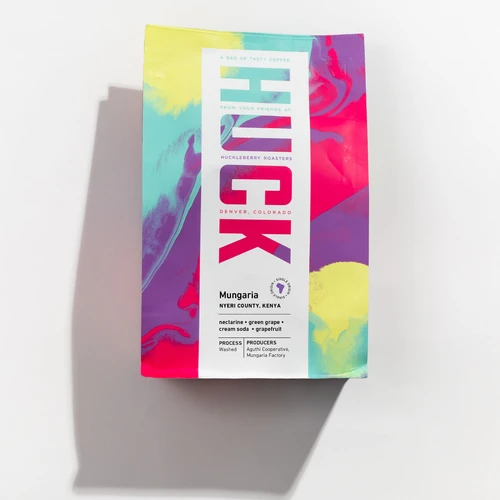
Mungaria, Kenya
Mungaria is a bright, juicy leadoff for Kenya season, back for its fifth year at Huck!
Kenyan coffees are truly special. The combination of SL28 and SL34 varieties, clay soil, high altitudes, and meticulous processing can yield coffees that are big and complex in a way that’s uniquely Kenya. The best examples combine zippy acidity, intense fruit, and juiciness in a way that we love. This year’s Mungaria hits that nail on the head for us.
In Kenya coffee-speak, a factory is a local cooperative, based around a single washing station, and these factories typically organize themselves into larger farmers cooperative societies (FCS) for export efficiencies, farmer trainings, financing, etc. In this case, 219 farmers deliver their coffee to Mungaria Factory, where it is washed using a single fermentation, and dried slowly on raised beds, without a post-wash soak.
Mungaria is part of the larger Aguthi FCS, and while Mungaria is maybe more Huck-famous than world-famous, Aguthi has well-earned international fame. Coffees from fellow Aguthi factory, Thageini, have featured prominently on the World Barista Championship stage, and it’s no coincidence that Mungaria is also delicious.
Over the past few years, we’ve been lucky to get to know some of the folks at Mungaria, particularly factory president Pharis Kibilenge and factory secretary Bernard Waigwa. And while we’ve visited the factory in years past, this season was our first chance to visit during harvest and meet some of the farmers behind the coffee. While we’ve been excited about roasting Mungaria for years now, we came back from Kenya this January, even more excited and inspired than before.
This year’s Mungaria is a killer start to 2026 Kenyas. With nectarine-like fruitiness, cream soda sweetness and mouthwatering grapefruit and green grape acidity, this might be our favorite Mungaria to date!
$25.00
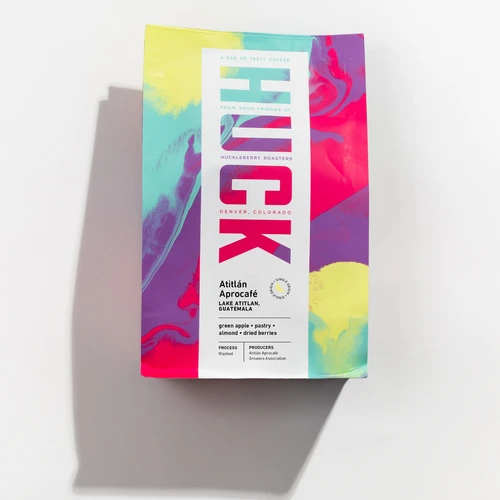
Atitlan Aprocafe, Guatemala
Guatemala is always on our minds here at Huckleberry, and even though the coffees from the AProCafé Atitlán Growers Association might only be on our menu for a few months each year, these coffees represent year-round work and commitment from both Huck and the growers. After months of work and a bit of waiting, we’re always excited to drop this coffee back into the lineup.
We've been roasting coffee from AProCafé since 2015, and it’s been a hands-on relationship since day one. Several years ago we worked with the group to develop their first single farmer microlot program, and for the past 9 years, have used a portion of proceeds from our holiday Sister Winter blend to help the group with a variety of projects, from drying beds, to weed whackers, to final touches on a mini wet mill.
This particular coffee is a blend from individual farms within the association. Some of the coffees are fully-washed and dried by the farmers themselves, some processed collectively at the group’s wet mill in Panyebar. We’ll also have a few special single farm microlots from the group, Sister Winter will be back in full force soon, and coffees from the association have been a major part of Blue Orchid, Sound and Vision, and our kegged cold brew since the start of summer.
Don’t sleep on the micros or the holiday blend, but the main lots from AProCafé as a whole are equally special. We're tasting milk chocolate, pear, subtle berries, and almond in this year's crop - dependably sweet and delicious!
This past May, Aprocafé co-director Pedro Isaías Gonzales was killed in a car accident. He leaves a massive hole at the association, but an even bigger one for his family. Huckleberry is sending a portion of sales from all Aprocafé coffees directly to Pedro's family, and also inviting our community to contribute. If you would like to make an additional contribution, please visit our donation page.
Roasted coffees marked as Organic Certified Farms/Mills/Cooperatives are not Certified Organic roasted products, as Huckleberry is not an organic-certified roasting facility
$25.00
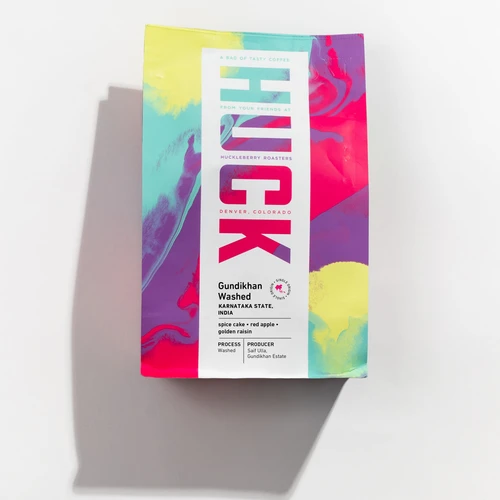
Washed Gundhikan, India
For the second year running, we’re stoked to roast two coffees from Gundikhan Estate in India! Saif Ulla's natural was the coffee that really convinced us to leap into Indian coffees a few years back, and last year was our first time roasting his washed coffee, too! This year’s Gundikhan washed is sweet, creamy, and delicious!
Coffees from India are still a relative rarity on US specialty roasters' menus, but coffee in India has a storied history, tracing back further than any country besides Ethiopia and Yemen. Indian coffee dates to the late 1600s when, according to legend, a Sufi pilgrim named Baba Budan smuggled coffee seeds from the Arabian Peninsula, planting them in the Western Ghat mountain range.
Despite the long history, we haven't always associated Indian coffees with the qualities we seek out at Huck, and for a long time, we steered clear of coffees from mainland Asia. But producers in India, China, and Myanmar, to name a few countries, have raised the bar on the continent, and thanks to some lovely coffees and persistent ear-bending by our friend David at Osito Coffee, we've had to reconsider those preconceived notions. Insert trite reference...traveling to the far east...opening one's mind...in this case about coffee.
Saif Ulla's farm, Gundikhan Estate, sits in the same mountains where Baba Budan planted India's first coffee seeds centuries ago, and he's equally passionate about preserving the area's biodiversity as he is its coffee heritage. Saif is a founding member of KaadKaapi Collective, a group of environmentally-conscious farmers aiming to preserve habitats and migration corridors for native animal species. Extremely dense shade cover and the occasional downed tree - courtesy roaming elephants and Gaur (Indian Bison) - make for significantly lower productivity and higher costs, offset by pursuing quality and earning higher prices.
We highly recommend giving both Gundhikans a spin side-by-side. And while the natural is definitely a fruitbomb, Saif’s washed process is a much calmer, approachable affair. Go ahead, add milk if you want. But also, no need. We’re tasting creamy butter cookie and macadamia, plus soft citrus, fig and golden raisin to round out a very comforting cup of coffee.
$25.00
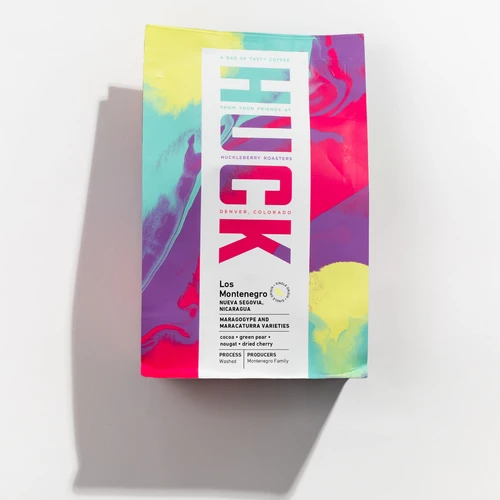
Los Montenegro, Nicaragua
Big beans and big sweetness, coming your way from the Montenegro family in Dipilto, Nicaragua!
When we visited Nicaragua in 2024, the time we spent with Fredy and Guillermo Montenegro - and Fredy’s dogs - was a highlight. Each member of the Montenegro family - Fredy, Erlin, Guillermo, and Guadalupe - owns and operates their own small farm in the Dipilto area, but lend hands on each others’ farms, and sometimes pool their coffee together. The family’s passion for coffee was evident from the moment we stepped onto the farms, and we’re excited to bring their coffee back to Denver!
For the third year in a row, we’re showcasing the Montenegro family’s Maras - related, huge-beaned Maracaturra and Maragogype coffee varieties. While we generally believe (or tell ourselves) that size doesn’t matter, at least when it comes to coffee, variety does. The Maras from Northern Nicaragua are unique when compared to the more prominent Caturras and Pacas in the area, but because they’re so much bigger than the other beans, it is important to keep them separate. While the Montenegros don’t produce too much of the big-beaned stuff, they do produce it very well.
This year’s Mara separation from the Montenegros is a lovely close to this season’s Nicaraguas. We’re tasting cocoa, green pear, nougat, and dried cherries. Freaking huge beans and a delicious cup of coffee from the Montenegros.
$25.00
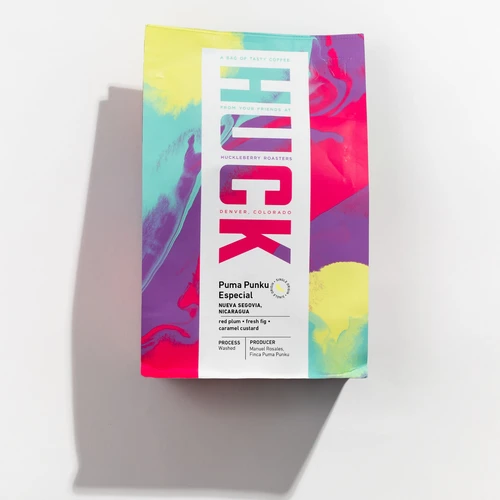
Puma Punku Especial, Nicaragua
We weren’t expecting this one. Think of Puma Punku Especial as an Easter egg - one that’s only available in Huck cafes and our site!
Manuel Rosales is our righthand man in Nicaragua. He runs Puma Coffee, and is responsible for sourcing, drying, and processing all of Huck’s Nicaraguan coffee. He also has a small farm, Finca Puma Punku, and this year we’re featuring his coffee for the first time, as half of Amigos Mozonte.
Earlier this summer, we thought we were set on Huck’s Nicaragua offerings for the year - Amigos Mozonte, a Maracaturra lot from the Montenegro family, and coffees from the larger Puma Coffee network that we’ll feature in Blue Orchid, Sound & Vision, and Civitas.
Then Manuel delivered some great news. He had entered a small lot from Puma Punku into the Nicaraguan Cup of Excellence competition, and he won 3rd place in the washed category!
We love seeing our partners succeed, so we were stoked for Manuel. The guy deserves all the recognition he can get, and we were happy to see Manuel earn a very good price in the auction, courtesy Sarutahiko Coffee in Japan. But as far as Huck was concerned, our plan was to convince Manuel to sell us some of that coffee next year.
Then our Nicaraguan coffees showed up in the US, and Manuel told us to keep an eye out for a specially-marked bag amongst our Amigos Mozonte. Turns out Manuel had a little bit of coffee left over from his CoE lot, and had saved it for Huck!
Is this the CoE coffee? Not exactly. Manuel only had ⅔ of a bag left from the competition, so he blended it with a similar coffee from the farm, processed the same way, to make a full 152 pound bag. Honestly, we may have asked him to just keep the coffee separate for us, had we known, but hey, it was a surprise. And even though it might not be the exact CoE winner, it’s too good to not let it shine!
Puma Punku Especial is an especially-tasty version of the profile we love in washed Nicaraguan coffees. Deeply sweet and approachable, but with fig- and plum-like fruit that sets it on its own pedestal. Cheers to Manuel, and we’re excited to share a few roast batches from Puma Punku!
$25.00
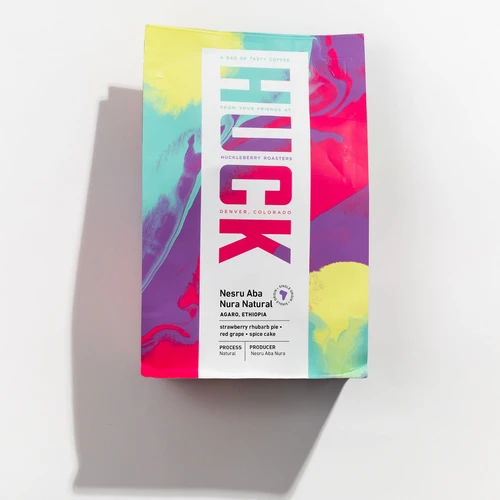
Nesru Aba Nura Natural, Ethiopia
Nesru Aba Nura follows Haro Beddame as Huck’s second natural Ethiopia this year, and we’re excited to showcase her coffee for the first time!
Huckleberry’s Ethiopian coffee sourcing has traditionally focused on the country’s southern growing regions, including Yirgacheffe, Sidama, and Guji. We love those coffees, but over the past few years, we’ve started to focus more on the west, thanks to Mike Mammo, Addis Exporter, and Osito Coffee. We’ve featured washed coffees from Mike’s Telila washing station in our single origin lineup for several years now, and this is the second season we’re roasting naturals from the upstart Tokuma Group.
This year we had the pleasure of traveling to the west with Mike, to get a better understanding of where our coffee comes from, and to meet some of the folks behind it. Southern Ethiopia is a land of tiny producers, and most of our coffees are the fruits of hundreds, if not thousands of small farms, processed collectively by private stations or cooperatives. In contrast, farms in the Agaro area of Jimma can be quite a bit bigger, with an increasing number of farmers processing and exporting their own coffees.
Tokuma is a group of medium- to large-size farmers in Agaro who process their coffee separately, but band together to market their coffee, organize trainings, and improve their collective coffee. Many of the farmers are relatively new to processing their own coffee, so the quality keeps on improving. And while last year, we roasted the coffee for our Phantom Limb and Sound and Vision blends, this year we wanted to seek out a coffee to highlight on its own.
Enter Nesru Aba Nura. She and her husband Mensur Aba Hika are a power couple within the Tokuma Group, each owning separate farms sitting at or near 2000 meters above sea level. We had the pleasure of spending a half day with Nesru and Mensur on our visit, and when it came time to selecting coffees, both produced lovely naturals this season. Ultimately, by the time coffees arrived in the US, we settled on Nesru for its deep sweetness, but Mensur’s coffee is currently a key component of our Phantom Limb blend!
In our experience, naturals from the West lean into rounder sweetness, cooked fruit, and subtle spice, as opposed to the brighter, more floral coffees from Yirgacheffe and the greater Ethiopian South. Nesru’s coffee is a lovely example of this round, sweet, and fruity profile, with notes of strawberry rhubarb pie, red grape, fruit leather, and spice cake. Super tasty coffee, and a lovely first harvest for Nesru at Huck!
$25.00
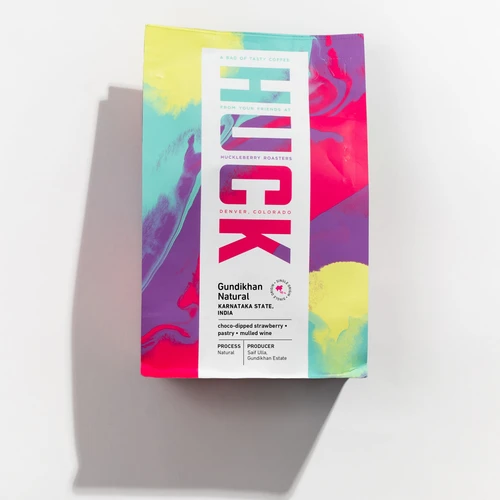
Natural Gundhikan, India
Saif Ulla's natural was the coffee that really convinced us to leap into Indian coffees a few years back - a true game-changer for us. We’re excited to have Gundikhan back for its fourth delicious season in our roastery, and we’re roasting two coffees from the farm: a creamy and approachable washed coffee, plus this fruity, sangria-like natural!
Coffees from India are still a relative rarity on US specialty roasters' menus, but coffee in India has a storied history, tracing back further than any country besides Ethiopia and Yemen. Indian coffee dates to the late 1600s when, according to legend, a Sufi pilgrim named Baba Budan smuggled coffee seeds from the Arabian Peninsula, planting them in the Western Ghat mountain range.
Despite the long history, we haven't always associated Indian coffees with the qualities we seek out at Huck, and had always steered clear of coffees from mainland Asia. But producers in India, China, and Myanmar, to name a few countries, have raised the bar on the continent, and thanks to some lovely coffees and persistent ear-bending by our friend David at Osito Coffee, we've had to reconsider those preconceived notions. Insert trite reference...traveling to the far east...opening one's mind...in this case about coffee.
Saif Ulla's farm, Gundikhan Estate, sits in the same mountains where Baba Budan planted India's first coffee seeds centuries ago, and he's equally passionate about preserving the area's biodiversity as he is its coffee heritage. Saif is a founding member of KaadKaapi Collective, a group of environmentally-conscious farmers aiming to preserve habitats and migration corridors for native animal species. Extremely dense shade cover and the occasional downed tree - courtesy roaming elephants and Gaur (Indian Bison) - make for significantly lower productivity and higher costs, offset by pursuing quality and earning higher prices.
We highly recommend giving both Gundhikans a spin side-by-side. Look to the washed coffee for creamy comfort, then this natural for a wilder ride. We’re tasting tropical fruit sangria and tart pomegranate, with a lingering, bittersweet chocolate finish in another delicious year of Saif’s natural!
$26.00
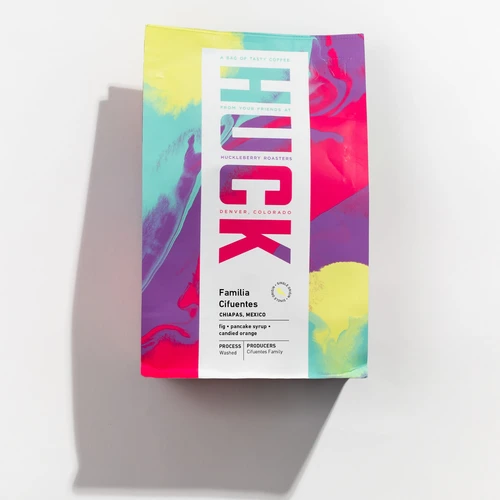
Familia Cifuentes, Mexico
We’re kicking off Mexico and Central America season with something new - a new Mexican (not New Mexican) coffee from the Cifuentes family in Chiapas!
Rosalba Cifuentes grew up producing coffee in the Bella Vista area of Chiapas, Mexico, and has established herself as a leader in the area’s coffee community. Several years ago she founded Mayan Harvest, a social enterprise focused on helping smallholder farmers in the area improve practices and access better markets.
Rosalba and her extended family also farm coffee themselves, and Huck is excited to roast this gem of a washed coffee from the collective family. Rosalba, Eugenio, Froilan, Otoniel and Omar each own separate plots in Bella Vista, farming and processing separately, but pooling the coffee after it has dried.
$23.00